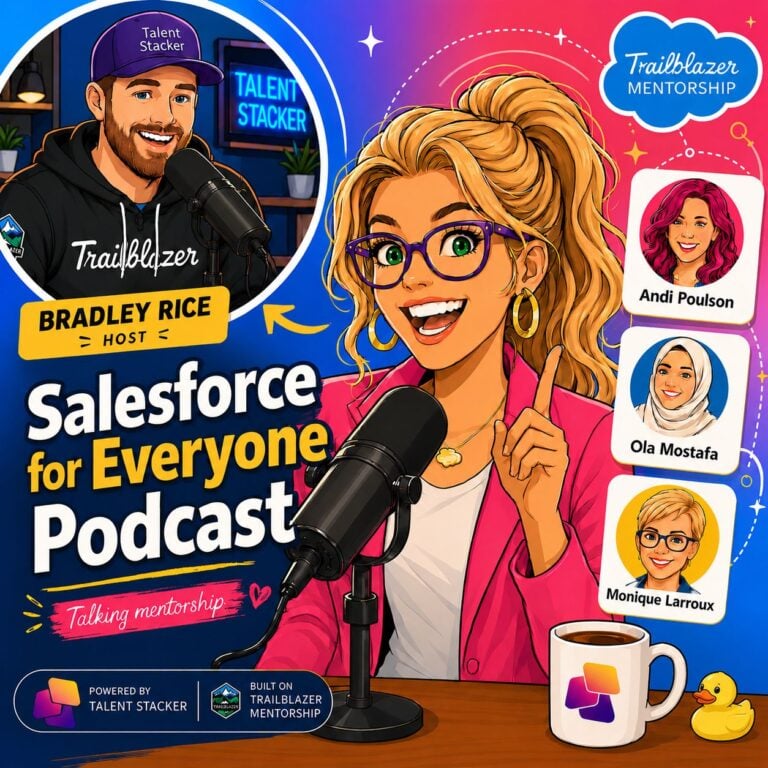
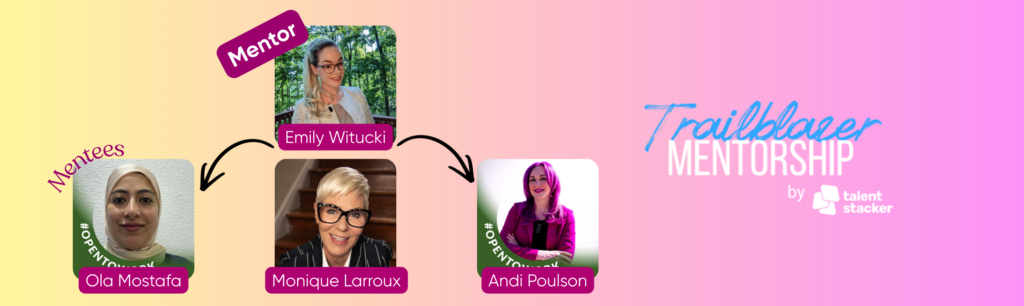
In this episode of the Salesforce For Everyone podcast Bradley Rice sits down with Emily Witucki, a Salesforce consultant and first-time mentor on the Trailblazer Mentorship Platform, alongside her three mentees: Andi Poulson, Ola Mostafa, and Monique Larroux.
Together, they reveal how personal connection, not just technical guidance, is what truly accelerates a Salesforce career. As host Bradley Rice puts it, success is roughly 30% technical skill and 70% communication, empathy, and authentic human connection.
Who benefits from this article? Anyone pursuing a Salesforce career, whether brand new or returning after a break, as well as experienced professionals considering mentorship in either direction and companies looking to invest in community-building.
What can you expect as an outcome? A clear understanding of how the Trailblazer Mentorship Platform works and the confidence to apply, whether as a mentee, a mentor, or a sponsor.
Key Topics from Episode 63
1. Introducing the Panel and the Purpose of Mentorship (00:01:16 – 00:02:16)
Bradley frames the episode as the first panel of 2026, highlighting mentorship’s value at every career stage. The guests introduce themselves:
- Emily Witucki: Salesforce consultant, marketing director for Mile High Dreamin and Dreamin’ in Data, and first-time mentor
- Andi: returning to Salesforce after a break, self-taught, seeking renewed momentum
- Ola Mustafa: CRM peer tutor at Calbright College, certified admin, seeking her first Salesforce job
- Monique: a sales professional of 11 years, weeks away from her admin certification
2. Why Emily Chose to Mentor (00:06:35 – 00:08:04)
Emily is the “Salesforce Fairy Godmother,” inspired by a lifelong admiration for those who help others. Her core belief:
- Life is hard and isolation is real. The Talent Stacker community showed her what belonging and support feel like
- She wanted to pay that feeling forward, leading with enthusiasm and care
3. The Mentees’ Starting Points (00:08:37 – 00:14:13)
Each mentee came to the platform from a different place, showing that mentorship is not one-size-fits-all:
- Andi felt stuck after failed job applications and struggling interviews, wanting someone to challenge and redirect her
- Ola had her certification but no roadmap for what came next
- Monique had cycled through frustration and giving up, needing both direction and encouragement
4. How the Trailblazer Mentorship Platform Works (00:10:15 – 00:14:13)
Bradley explains that the membership program is completely separate from Talent Stacker’s paid programs. Anyone can apply. Applications are reviewed anonymously; decisions are based purely on your answers. Mentees browse and filter mentors, then request access; the mentor accepts or declines.
Talent Stacker has accepted 100% of applicants for the last two cohorts. The only reason for rejection is a low-effort application. Designed for four sessions, though real connections often grow far beyond that.
5. The Mentor as a Mirror: Emily’s Approach (00:26:05 – 00:27:54)
Emily’s philosophy reframes what mentorship really is: “I’m just a mirror. Everything they need to succeed is already there.” Her role was simply to remind each mentee of who they already are:
- She helped Andi build a personal brand around her pink hair and personality
- She pulled Ola’s love of baking into her demo org
- She put Monique’s favorite polka dots in her LinkedIn header
6. LinkedIn as a Career Tool and Community Space (00:30:13 – 00:41:30)
The panel unpacks LinkedIn as far more than a job board:
- Bradley calls it a necessary part of the modern job search
- Ola doubled her connections during the mentorship period
- Andi’s group became a mini LinkedIn community, tagging and supporting each other
- Emily encourages bringing real humanity to posts rather than posturing
- Authentic engagement works the algorithm in your favor, expanding your reach over time
7. What’s Next and a Call to Action (00:42:02 – 00:55:57)
Each mentee shares their next steps, closing with a collective nudge to anyone on the fence:
- Andi is pursuing Business Analyst and Sales Cloud Consultant certifications and building her portfolio
- Ola is chasing Salesforce Legend status and adding Google Data Analytics
- Monique is two weeks from her admin certification, with plans to apply her process-streamlining background to Salesforce
- Emily encourages companies to sponsor the program; her employer, Lenticular Solutions, confirmed support for the next cohort
Notable Insights
Landing a Salesforce job is 70% soft skills. Getting hired is roughly 30% technical and 70% everything else: communication, empathy, and human connection. A certification gets you in the room; your ability to carry a real conversation and show you’re someone people want to work with every day is what closes the deal.
A certification is not your value, it’s just the entry point. After earning her admin cert, Ola didn’t know what came next. Emily helped her see that building dev org projects, creating a portfolio site, and explaining concepts clearly are what actually communicate value to an employer.
A mentor reminds you of what you already have. Emily’s “mirror” philosophy is the episode’s most powerful idea. She didn’t teach her mentees who to be, she helped them recognize and show the world who they already were. That shift from self-doubt to self-awareness is where real confidence is built.
Authenticity is a strategic career move. Bradley shares the story of a colleague who adopted a persona that didn’t fit, burned out in two months, then found the right company once he showed up as himself. Putting the real you into your LinkedIn and portfolio isn’t unprofessional, it’s how you find the job that actually fits.
Relevance matters as much as credentials in a mentor. Someone who just landed a Salesforce job may be the most valuable mentor available because they know what it took right now, in this market. A 10-year architect who landed their role in 2011 is working from a very different playbook.
The Salesforce community self-selects for generosity. People who show up to compete or tear others down tend to filter themselves out, because the culture simply doesn’t reward that energy. The community’s default mode is helping, and that creates a rare professional space where support feels genuine.
How to Take Action
Apply to the Trailblazer Mentorship Platform, even if you’ve tried before. Both Andi and Monique initially heard nothing back from mentors. The key was trying again. Head to trailblazermentorship.com, fill out your application thoughtfully, and use the filters to find a mentor whose background matches where you want to go.
If you’re new to Salesforce and not sure you’re ready for a Salesforce mentor start with the Free 1 Hour Challenge here to get started quickly!
Build projects in your dev org and turn them into a portfolio. You don’t need a paid job to demonstrate real skills. Ola built a Lightning Web Component and completed an API callout. Andi converted a slide deck into a portfolio website. These projects, and your ability to talk through them, move you from “I have a cert” to “I can do the work.”
Show up on LinkedIn as yourself, consistently. Add a header that reflects your personality, post about problems you’ve solved, and engage genuinely. The goal isn’t to perform professionalism, it’s to let the right employers and opportunities find the real you.
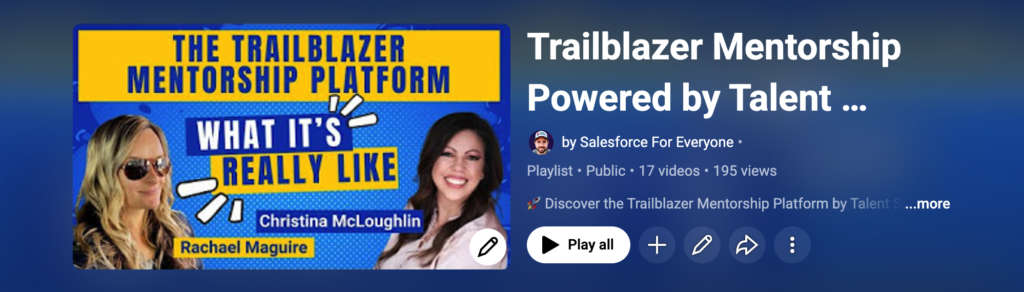
Ready to learn more about the free Trailblazer Mentorship Platform? Click here or the image below for a full video playlist outlining how the platform works, mentee stories and more 🎉
Want Even More Salesforce Career Content?
Watch Salesforce Career focused videos, listen to podcasts and check the menu items above for links to free content and courses.