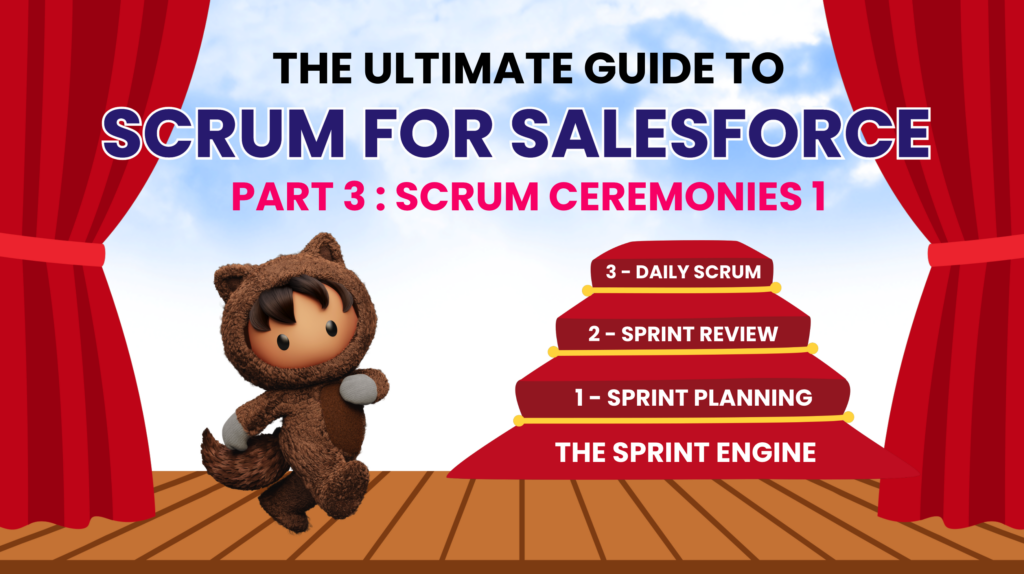
The Salesforce Scrum Series


Article 3: The Sprint Engine Part 1—Planning, Stand-ups, and Reviews
In the previous article, we mastered the language of Scrum. Now, it’s time to put that vocabulary into action. In the Salesforce world, speed is often the expectation, but without a structured process, speed leads to “technical debt” and burnout.
While Sprints can vary, the 2-week Sprint is the industry gold standard. It provides enough time to build complex Flows or Apex triggers while remaining agile enough to pivot when business requirements change. Let’s look at the first three major ceremonies that keep this engine running.
1. Sprint Planning: Setting the Stage
Purpose: To define the work to be done and create a realistic plan. When: Day 1 of the Sprint. Duration: Usually 1–2 hours.
Before you start building, you need a map. Sprint Planning is where the Scrum Master, Product Owner, and Development Team align on the “Sprint Goal.”
The Agenda:
- Spillover Check: Review unfinished items from the last sprint.
- Logistics: Confirm team capacity, including holidays and planned PTO.
- The Numbers: Present velocity and confirm how many “points” the team can realistically take on.
- The Selection: Review the top stories/bugs in the backlog and commit to the scope.
- Risk Assessment: Discuss potential blockers (e.g., waiting on a third-party API or sandbox refreshes).
Pro-Tip: 1 hour is often sufficient if the backlog has been well-refined beforehand. Don’t let this meeting drag on; focus on alignment and commitment.
2. Daily Scrum (The Stand-up): The Pulse Check
Purpose: To share updates, identify obstacles, and stay aligned. When: Daily, at the same time. Duration: Strictly 15 minutes.
The Stand-up is not a status report for management; it’s a huddle for the team. Everyone should come prepared to be concise.
The “Three Questions” Format:
- What did you accomplish yesterday?
- What will you be working on today?
- Are there any impediments or blockers in your way?
Alternative Approach: Sometimes it helps to “walk the board”—going item-by-item through the sprint backlog to check on progress and foresee risks. This keeps the focus on the work rather than the individuals.
3. Sprint Review: The Showcase
Purpose: To demonstrate completed work and gather stakeholder feedback. When: The final day of the Sprint. Duration: 1 hour.
This is the most rewarding part of the sprint. It’s where the team shows off the shiny new Salesforce functionality they’ve built.
The Agenda:
- The Demo: Show the “Done” work in a Sandbox or UAT environment.
- Feedback Loop: Stakeholders provide immediate input. Does this meet the business need?
- Backlog Update: Based on the feedback, the Product Owner may adjust the priority of future items.
Mastering these three ceremonies provides the rhythmic “heartbeat” your Salesforce team needs to stay aligned and productive. By setting a clear map in Planning, maintaining a daily pulse in the Stand-up, and celebrating progress in the Review, you transform your development process from a reactive scramble into a strategic delivery engine.

What’s Next in the Salesforce Scrum Series?
But as any seasoned Scrum Master knows, building the features is only half the battle—the other half is refining the process itself. In our next article, we’ll dive into Part 2 of the Ceremony Guide, where we explore the Retrospective, the coordination of the Scrum of Scrums, and the vital art of Backlog Refinement. See you there!
Want Even More Salesforce Career Content?
Watch Salesforce Career focused videos, listen to podcasts and check the menu items above for links to free content and courses.