Welcome to the Salesforce Scrum Expert Article Series: Your Practical Guide to Scrum in Salesforce
If you’ve ever felt like your Salesforce development cycles are a chaotic whirlwind of “urgent” requests, shifting priorities, and endless meetings that don’t seem to move the needle, you aren’t alone.
In the fast-paced world of Salesforce ecosystem delivery, Scrum is often touted as the magic solution. But there is a big difference between “doing” Scrum (following the rules) and “being” Agile (delivering actual value). Whether you are a solo admin trying to organize your backlog, a new Scrum Master, or a Lead Dev looking for better team alignment, this series is designed for you.
Throughout the articles in this series, we aren’t just going to talk about theory. We are going to dive into the “how-to”—providing you with the exact meeting structures, template questions, and communication plans you need to run a high-performing 2-week Sprint.
What to Expect in This Series
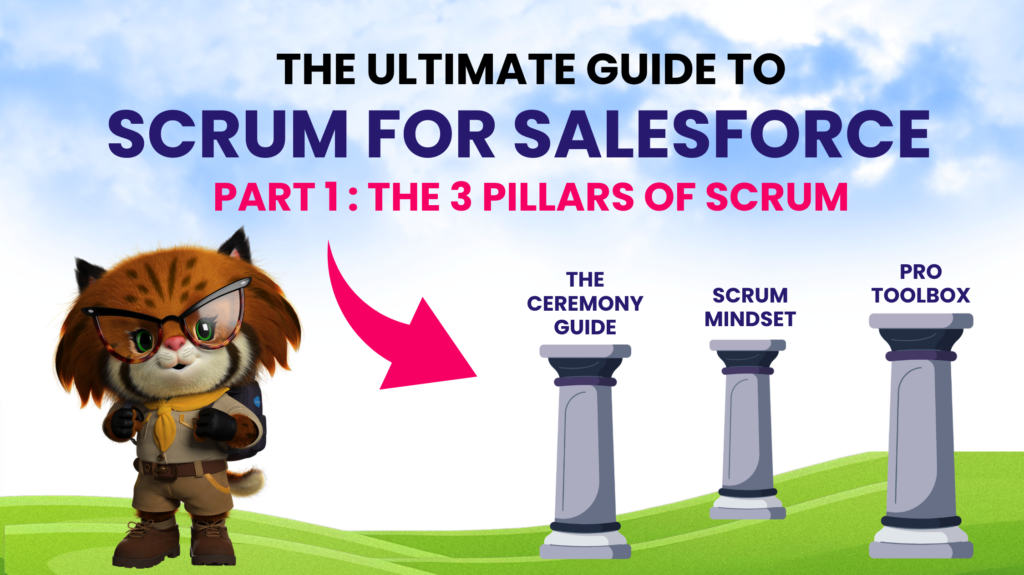
This series is broken down into three core pillars: The Ceremony Guide, The Scrum Mindset, and The Pro-Toolbox.
We are starting with the “language” of Agile to ensure we’re all speaking the same tongue before we dive into the mechanics. Here is the roadmap for our journey:
1. Foundations & Vocabulary
Article 1 (The Intro): You are here! An overview of the journey ahead.
Article 2 (Scrum Vocabulary): From “Spikes” and “Spillover” to “Velocity” and “Poker,” we’ll define the 20+ terms you need to sound (and act) like a Scrum expert.
2. The Scrum Ceremony Guide
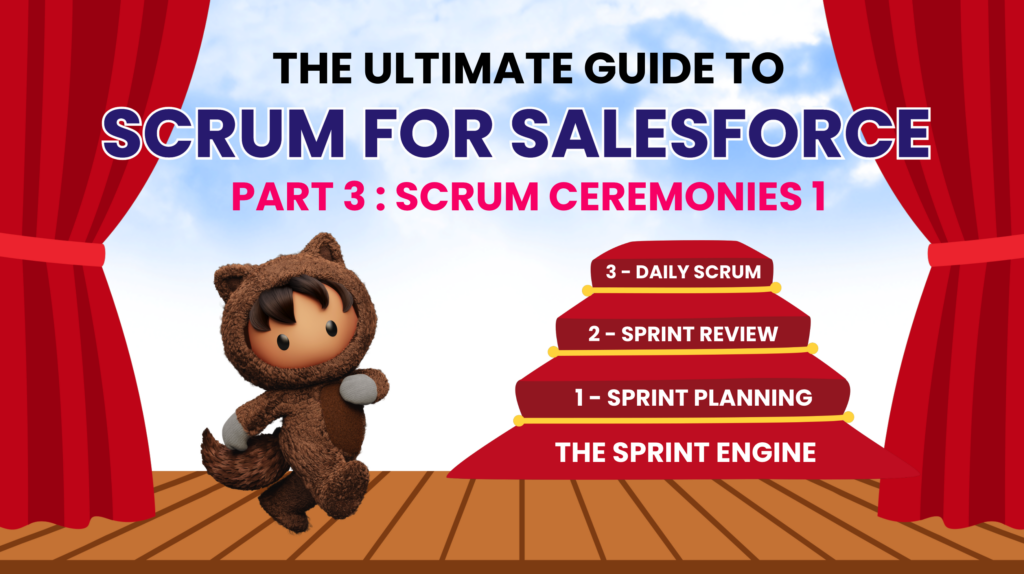
Article 3 (Sprint Meetings Part 1): How to master Sprint Planning, the Daily Stand-up, and the Sprint Review.
Article 4 (Sprint Meetings Part 2): Diving into the Retrospective, the “Scrum of Scrums,” and the art of Backlog Refinement.
3. The Scrum Mindset
Article 5 (Role & Coaching): Understanding the unique dance between the Scrum Master, Product Owner, and Dev Team. Learn why “asking the dumb questions” is actually a superpower.
Article 6 (Leading Offshore & Diverse Teams): Practical tips for navigating time zones, cultural nuances, and building a healthy team dynamic when you aren’t in the same room.
4. The Pro-Toolbox
Article 7 (AI for Scrum Masters): Use AI to save time and sanity by mastering high-stakes communication—from holding teammates accountable to drafting professional stakeholder updates with confidence.
Article 8 (The User Story Lifecycle): A deep dive into the journey of a requirement from its first inception to “Done” in the Salesforce production environment.
Why the 2-Week Sprint?
While Sprints can technically last anywhere from 1 to 4 weeks, the 2-week Sprint has become the gold standard in Salesforce environments. It is long enough to build and test complex functionality, but short enough to allow for the rapid feedback that Salesforce stakeholders expect.
The Goal: Confidence, Not Just Compliance
The goal of this series isn’t just to help you check a box. It’s to empower you to facilitate with ease, foster a collaborative environment, and drive results that your Salesforce users will actually notice.